Digital Payment Shifts and Their Effects on Feature Access in Established Game Studios
Sage Flores · Oct 27, 2026
Digital Payment Shifts and Their Effects on Feature Access in Established Game Studios
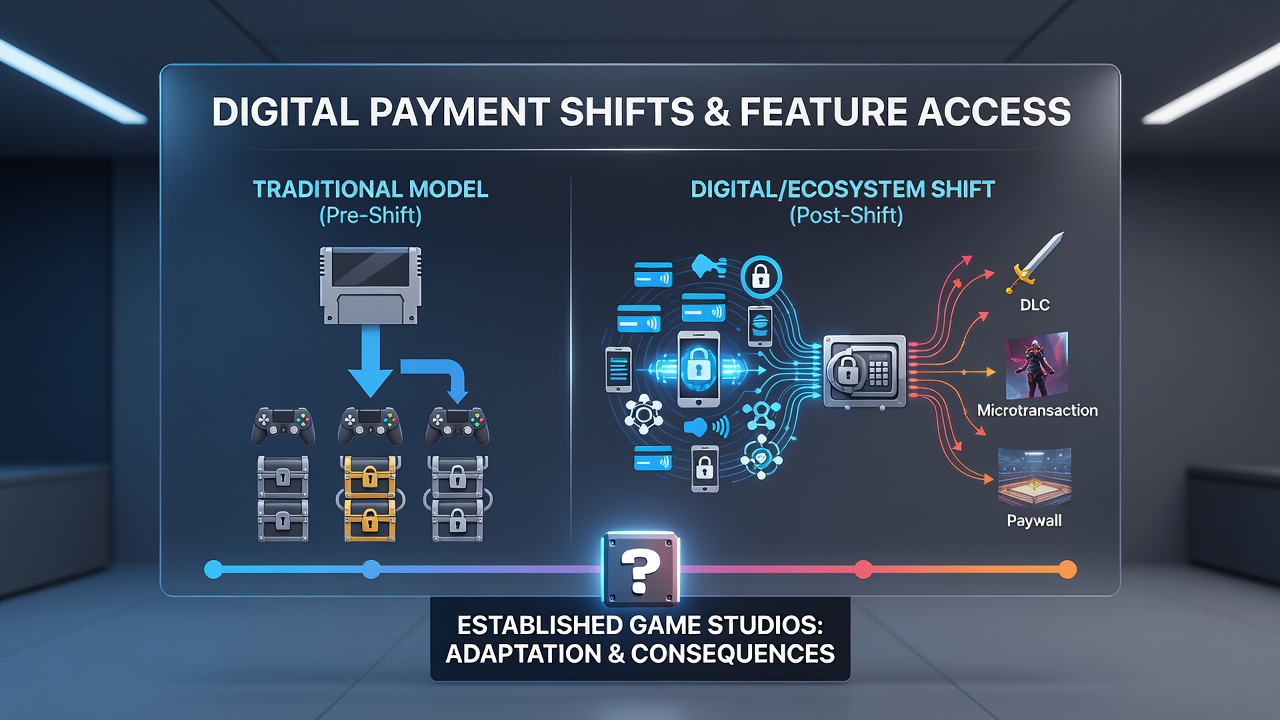
Established game studios have tracked a steady transition toward digital payment systems over the past decade, with data from industry reports indicating that mobile wallets and subscription-based models now account for a growing share of in-game revenue streams. This change has coincided with adjustments in how players gain access to premium features, including cosmetic items, level expansions, and multiplayer enhancements. Observers note that studios such as those behind long-running franchises have integrated these payment pathways to streamline purchases while complying with regional financial regulations.
Transition to Digital Wallets and Subscription Platforms
Research from the Entertainment Software Association shows that digital wallet adoption among gamers reached significant levels by mid-2025, with further acceleration observed into October 2026 as platforms expanded support for services like Apple Pay and regional alternatives across North America and Europe. Studios responded by embedding these options directly into their launchers and mobile clients, which reduced friction during checkout and altered the timing of feature unlocks. Data indicates that subscription tiers, once limited to a few titles, now appear in multiple major releases, granting ongoing access to rotating content rather than one-time purchases.
Those who have examined transaction logs from larger publishers report that wallet-based payments correlate with higher completion rates for feature bundles, since users encounter fewer steps between decision and delivery. Yet this pattern varies by region; Australian government digital economy statistics highlight stronger uptake of government-supported instant payment systems, while Canadian industry analyses point to credit card integration remaining dominant in certain demographics.
Adjustments in Feature Access Mechanics
Feature access in established titles has evolved alongside these payment methods, with many studios shifting from permanent unlocks to time-limited or tiered entitlements. Studies conducted by academic researchers at institutions tracking digital media consumption reveal that players using digital wallets often receive immediate access to new items, whereas traditional card transactions sometimes introduce brief verification delays. This timing difference influences how content rolls out during live events and seasonal updates.
Regional Regulatory Influences
Regulatory bodies outside the UK, including the European Commission's digital finance framework updates, have prompted studios to display clearer pricing and refund policies within payment flows. These requirements have led to redesigned interfaces that surface feature costs earlier in the purchase journey. In parallel, reports from the Australian Competition and Consumer Commission note increased scrutiny on subscription auto-renewals, pushing developers to implement explicit opt-in confirmations before granting continued access to exclusive modes or items.
Case Examples from Major Studios
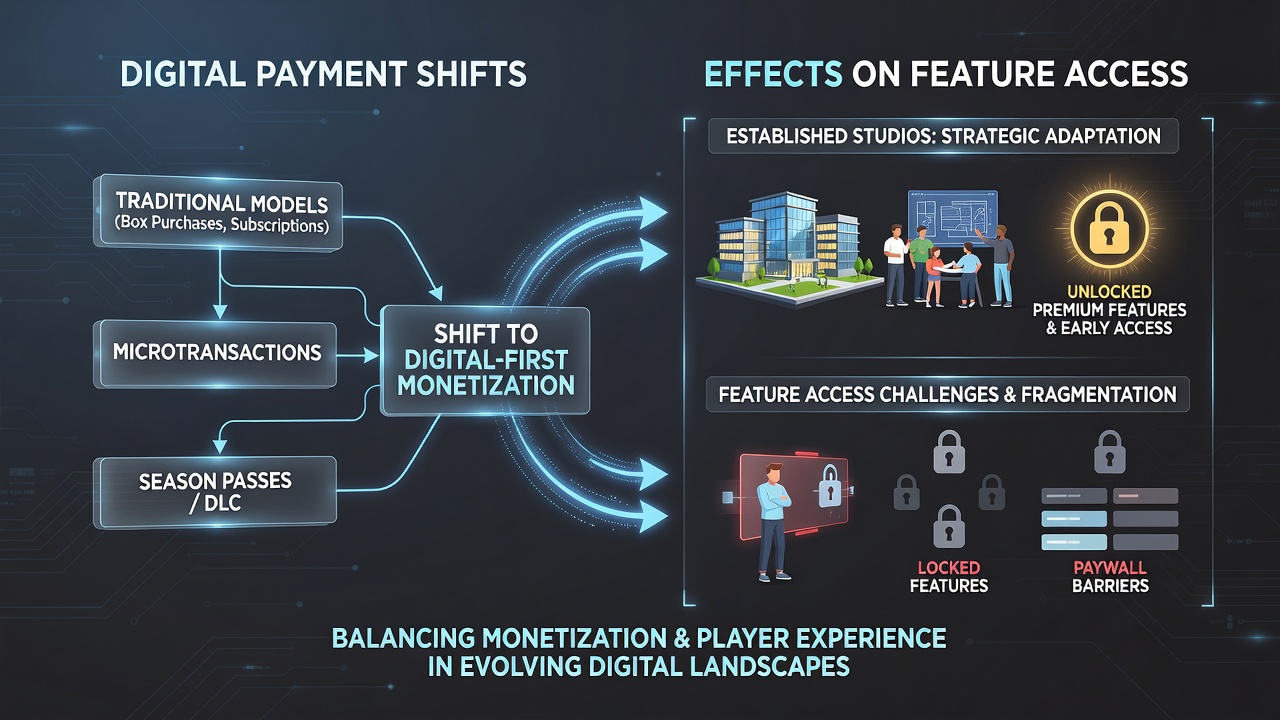
One long-established studio documented a 2025 pivot where integration of a popular digital wallet coincided with revised battle pass structures that rewarded consistent subscribers with accelerated progression. Figures released through industry channels show this adjustment coincided with measurable changes in daily active user retention during the first three months after implementation. Another publisher, operating across multiple platforms, introduced region-specific payment gateways in response to local banking preferences, which researchers linked to expanded access rates for cosmetic collections in previously underserved markets.
Those monitoring player forums and support tickets have observed that disputes over feature delivery drop when payment confirmation occurs within the same session, a pattern reinforced by platform-level improvements in transaction speed. Data compiled by university-led studies on interactive entertainment economics further suggests that studios maintaining multiple payment rails experience fewer interruptions to feature availability during peak release windows.
Technical and Infrastructure Considerations
Backend systems at established studios now routinely incorporate real-time reconciliation tools that sync payment status with account entitlements across consoles, PCs, and mobile devices. This infrastructure supports the rapid activation of features once funds clear, reducing the window during which players see locked content. Industry reports compiled through 2026 emphasize that API integrations with major wallet providers have shortened average processing times, allowing simultaneous rollout of updates and new monetization options.
Security protocols tied to these digital systems also affect access continuity; multi-factor authentication steps required by certain payment services can temporarily pause feature grants until verification completes. Observers tracking these workflows note that studios have introduced fallback options, such as stored value accounts within the game client, to maintain access flow during verification hiccups.
Conclusion
Digital payment shifts continue to reshape how established game studios structure and deliver feature access, with transaction speed, regional compliance, and subscription models playing central roles. Reports from organizations including the Entertainment Software Association and various national digital economy agencies document these patterns through 2026, showing measurable links between payment method choice and the timing of content availability. As platforms and regulators refine their approaches, studios maintain focus on reliable systems that keep feature unlocks consistent across diverse player bases and geographic markets.